Process optimization sits at the heart of business performance. Behind the term lies a very concrete discipline: making every business process faster, more reliable and less expensive. But what does it actually mean, which methods exist, and how do you go about it as an SME with no quality department and no dedicated team? Here is a complete guide.
What is process optimization?
Process optimization is the practice of analysing, rethinking and improving an organization’s business processes in order to increase their efficiency. A process is a sequence of steps that turns an input (an order, a request, a piece of data) into an output (an invoice, a delivered product, a decision).
Optimizing a process therefore means removing unnecessary steps, cutting lead times, eliminating errors and reducing costs — without degrading quality, quite the opposite. It is a continuous discipline: a process is never “optimized once and for all”, it keeps improving.
Optimization, digitization and automation are three different things
Confusing these three terms is the number one cause of failed projects.
- Optimizing means changing the process itself: removing steps, reordering them, clarifying business rules. It is organizational work, not IT work.
- Digitizing means replacing a paper form or a verbal exchange with a digital one. A bad process that has been digitized is still a bad process, just quicker to walk through.
- Automating means having software carry out tasks. It is an accelerator, not a corrector.
The order matters: optimize first, automate second. Automating a badly designed process industrializes its flaws, and makes every later fix far more expensive — because you then have to undo the configuration as well as the organization.
Why optimize your processes?
The benefits of an optimization initiative are direct and measurable:
- Time saved: fewer manual steps, less waiting, shorter cycles.
- Lower costs: less waste, less rework, better allocation of resources.
- Fewer errors: standardized, reliable processes reduce incidents.
- Better experience: customers served faster, employees freed from repetitive work.
- Less dependency on individuals: a written, tooled process no longer stops when the person who “knows how it works” is away.
- Agility: an organization with clear processes adapts faster to change.
Signs that a process needs optimizing
You do not need an audit to spot the candidates. A few symptoms come up almost every time:
- the same information is keyed in several times, into tools that do not talk to each other;
- lead times vary wildly from one case to the next and nobody knows why;
- parallel spreadsheets have appeared alongside the official system;
- controls were added after every incident and are no longer proportionate to the risk;
- the process stops when one person is away;
- teams have built workarounds management does not know about.
That last point is the most informative: a workaround is always the sign of a process that does not match the actual work.
The main process optimization methods
Several proven approaches coexist and often complement each other. The right reflex is not to pick one and stick to it, but to draw on whichever fits the problem.
Lean management
Born from the Toyota production system, Lean aims to eliminate waste (waiting, unnecessary movement, re-keying, document overproduction, defects) and keep only what creates value for the customer. It is the most cost-effective method in an SME: it needs little tooling and produces most of the gain.
When to use it: when the process is long and nobody knows where the time goes.
Six Sigma
Six Sigma tackles variability and defects using statistical tools. The goal is to make processes predictable and consistent in quality.
When to use it: when the process is broadly fast but unpredictable — two days once, three weeks the next time.
BPM (Business Process Management)
BPM is an approach to managing processes over time: you model them (often in BPMN notation), run them, measure them and evolve them. The map is not a decorative deliverable: it is what lets business and IT discuss the same object.
When to use it: when the process crosses several departments and each one only sees its own link.
Theory of constraints
It starts from a simple observation: a process runs at the speed of its bottleneck. Optimizing a step that is not the bottleneck does nothing for the overall lead time — a very common mistake, because people generally optimize the most visible step rather than the most constraining one.
Automation and low-code
Once the process has been simplified, the repetitive tasks that remain get automated with tools such as n8n, Make or Power Automate. That is the last step, not the first — we walk through a full example in Automating overdue invoice reminders with n8n.
The steps of an optimization initiative
A successful optimization follows a simple logic:
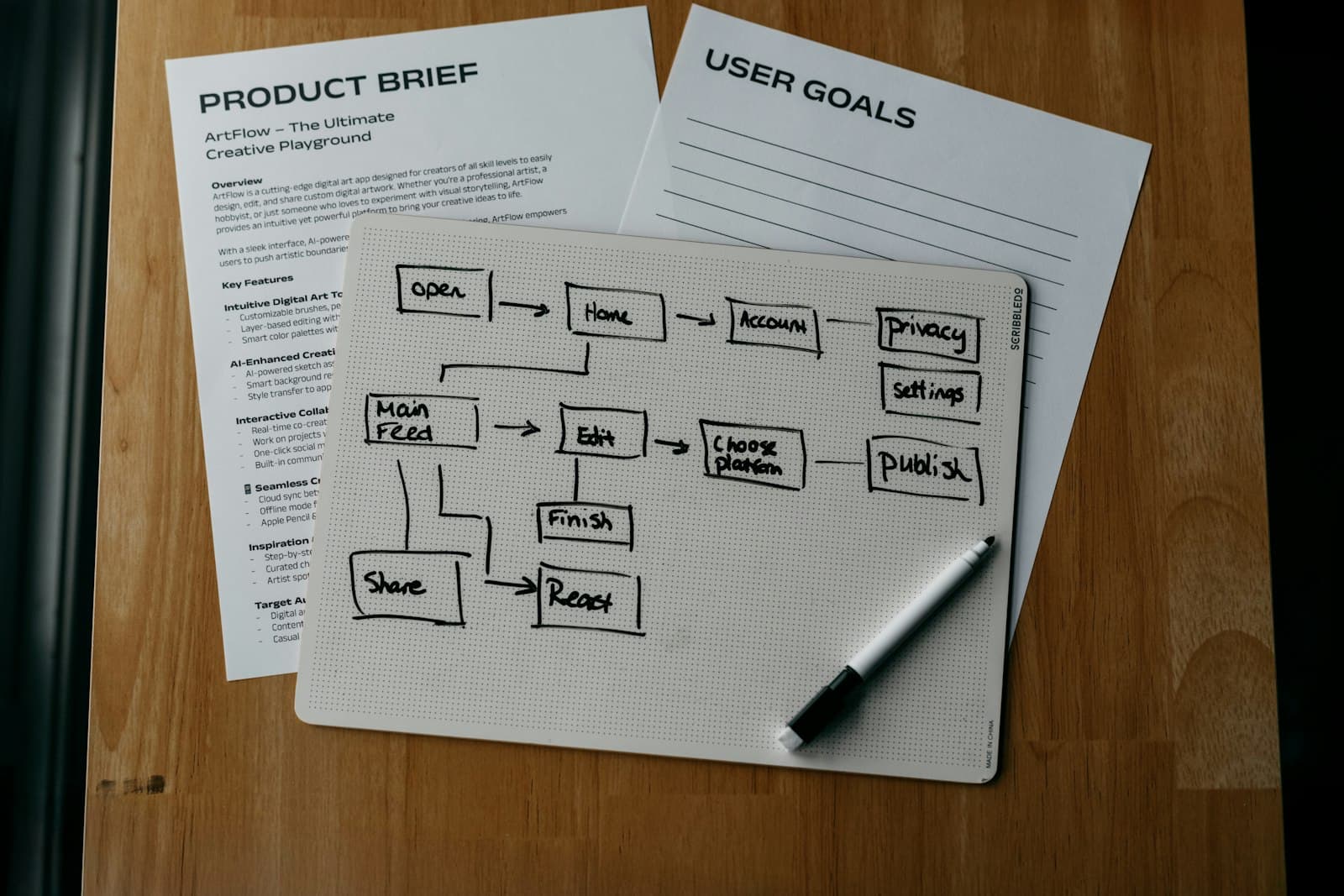
- Map the existing process: which steps, which people, which lead times? By observing the actual work, not by reading the procedures — the gap between the two is often the heart of the problem.
- Measure: volumes handled, time spent per step, rework rate, waiting points. Without orders of magnitude, an optimization gets debated instead of steered.
- Analyse: where are the bottlenecks, the non-value-adding tasks, the sources of error?
- Redesign: simplify, reorder, merge, parallelize, remove.
- Make it reliable: write down the business rules and the edge cases, so the outcome is the same whoever runs it.
- Automate what can be automated, with the right tool.
- Measure the gains and improve continuously: a handful of indicators is enough to see whether the gain holds or the process drifts back.
The most common mistakes
- Starting with the tool. Choosing software before mapping leads to bending the process to fit the tool rather than the other way round.
- Optimizing the most visible process rather than the most expensive one. The former is the one discussed at board level; the latter is often invisible and consumes far more.
- Only measuring the “before”. Without tracking indicators, nobody will know in six months whether the gain held.
- Forgetting the teams. An optimized process nobody applies produces no gain at all. The people who run the process are also the ones who know its workarounds: they are the best source of information, and the main success factor.
- Trying to fix everything at once. A cross-department initiative that delivers nothing for six months loses the organization’s support.
Where to start in an SME?
There is no need to overhaul everything at once. The best starting point is a process that is both frequent and irritating — invoice chasing, order handling, client onboarding, monthly reporting.
We covered the best candidates in 5 administrative processes to automate first in an SME.
Frequent, because the unit gain is multiplied by volume. Irritating, because the teams will back the change instead of enduring it. You optimize it, measure the gain, then extend the approach with a concrete case to show internally — infinitely more convincing than a framing memo.
Good news for SMEs: having no formal quality system is not an obstacle. It simply means starting from observing the actual work, which is a more reliable source than written procedures anyway.
Frequently asked questions
What is the difference between process optimization and automation? Optimization reworks the process itself (removing steps, clarifying rules); automation has software carry out tasks. The two complement each other, but you optimize first and automate second.
How long does an optimization take? On a bounded process, a few weeks between recording the current state and running the target process. On a cross-department scope, it is better to split the work into batches so the first gains land before the end.
Do we need ISO certification? No. A quality system helps because part of the processes is already documented, but it is not a prerequisite.
Do we have to replace our ERP to optimize our processes? Rarely, and it is generally the last option. Most of the gain comes from removing steps and connecting the tools you already own. Replacing an ERP is a heavy project that deserves to be decided on its own merits.
How do we know the optimization worked? By defining the indicators beforehand: end-to-end lead time, rework rate, cases handled per person. A gain you do not measure is a gain you will not be able to defend at the next budget round.
How we work at D1 Consulting
We support SMEs and mid-market companies in business process optimization: mapping the real process, measuring it, simplifying, making it reliable, then automating with the right tools. The goal is faster, more reliable and less expensive processes — and valuable time handed back to your teams.
To explore the subject further from an SME angle, we built a dedicated resource: Optimisation Process PME — methods, real French SME cases and practical guides (in French).
👉 Discover our process optimization service, our process audit and mapping service, or book a free assessment.