
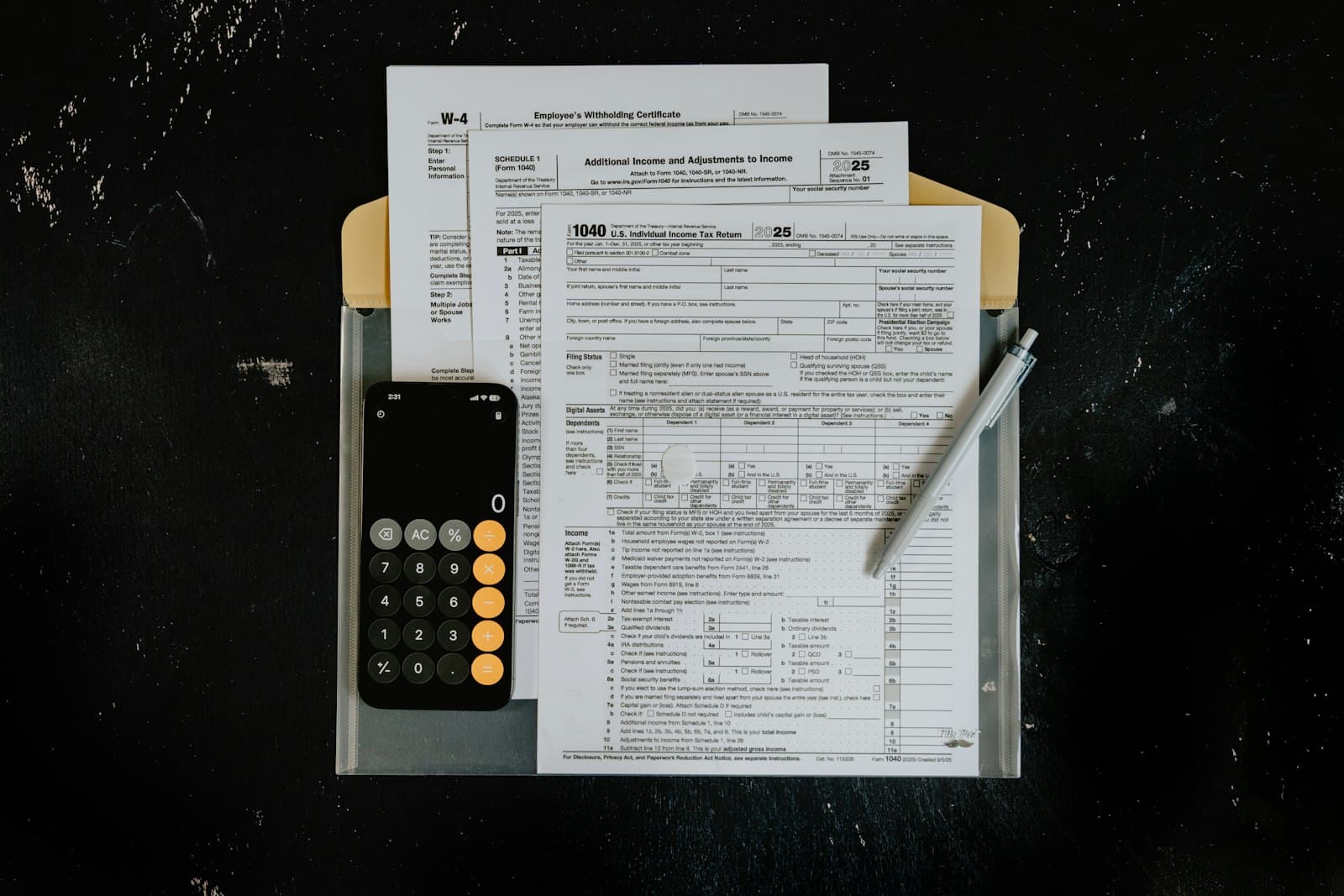
As of September 1, 2026, every French business must be able to receive electronic invoices, while large companies and mid-sized companies must also issue them and meet their e-reporting obligations. SMEs and microbusinesses will have to issue electronic invoices from September 1, 2027, as confirmed by the Ministry for the Economy’s calendar published on August 26, 2026. Knowing the dates, however, does not prevent operational mistakes when accounting, IT and sales teams attach different meanings to the same words.
This article therefore does not repeat our electronic invoicing preparation guide. It focuses on a narrower issue: what Factur-X, e-reporting and invoice lifecycle statuses actually mean for information systems, accounting and accounts receivable.
The promise heard everywhere: learn four terms and you are ready
The prevailing message is reassuring: select a platform, enable Factur-X, transmit e-reporting data and monitor invoice statuses. Your company will then be compliant without significantly changing its organisation.
There is some truth in this promise. The reform introduces a shared language through which software, platforms and companies can exchange invoices and processing information. It can also make the invoice journey more visible, from submission to payment collection.
The vocabulary is nevertheless simpler than the operations behind it. An approved platform cannot create data missing from your ERP. A Factur-X file cannot decide whether a transaction belongs to e-invoicing or e-reporting. A “refused” status does not tell your sales team who owns the dispute.
The term PDP has also changed. The official French name is now plateforme agréée, or approved platform, replacing plateforme de dématérialisation partenaire. These platforms are authorised to exchange electronic invoices and transmit the required data to the tax authorities.
What is true: vocabulary provides a shared map
The reform’s concepts become useful when each one is connected to a specific business operation.
| Term | What it actually means | Question to ask on Monday morning |
|---|---|---|
| E-invoicing | Electronic invoice exchange for domestic transactions between VAT-liable businesses established in France | Which sales fall within this scope? |
| Factur-X | A readable PDF/A-3 file containing an embedded XML file with structured data | Does our software produce the expected data or only a PDF? |
| Transaction e-reporting | Reporting data relating in particular to consumer sales and certain cross-border transactions | Where is this information currently stored? |
| Payment e-reporting | Reporting collections when VAT becomes due upon receipt of payment | Which accounting event confirms that cash was actually received? |
| Invoice lifecycle | Statuses exchanged during transmission, processing and payment | Who creates each status, and who must act on it? |
| Approved platform | The operator authorised to handle regulatory exchanges | How will our ERP and billing application connect to it? |
Factur-X is genuinely a hybrid format combining a readable PDF representation with structured XML data. The standards available in the official format and profile documentation also provide for the structured UBL and CII formats.
E-reporting serves a different purpose. According to the French tax authority’s presentation of the reform, transaction e-reporting covers, among other cases, operations with consumers and foreign operators. Payment e-reporting applies to operations for which VAT becomes chargeable upon collection.
Statuses also provide a shared operational language. A rejected invoice has generally failed a technical or regulatory platform control. A refused invoice has been rejected by the customer because of its content or commercial context. “Submitted”, “rejected”, “refused” and “collected” form the core group commonly described as mandatory, with the collected status transmitted when applicable, particularly for VAT due upon receipt of payment.
What is false, or only true under certain conditions
Factur-X is not simply an enhanced PDF
Embedding XML in a PDF is not enough if the structured data is incomplete, inconsistent or generated from poorly maintained fields. The selected profile, party identifiers, amounts, VAT rates and commercial references must match the readable invoice.
The French tax authority explicitly states that an ordinary PDF sent by email is not an electronic invoice under the reform because it does not necessarily contain the required structured data.
The accounting manager should therefore request a sample Factur-X file, its validation report and a mapping of the ERP fields used to produce it. A screenshot displaying “Factur-X compatible” is not an acceptance test.
E-reporting is not automatically generated from invoices
A company may correctly issue domestic B2B invoices while remaining unable to report consumer sales, international transactions or relevant payment collections. This information may be distributed across point-of-sale systems, online shops, CRM software, the ERP, bank feeds and accounting applications.
The finance director should commission a matrix connecting each sales category to its source system, VAT treatment, regulatory flow and internal owner. Without this mapping, exceptions will only surface during rejections or period-end reconciliations.
Statuses do not manage accounts receivable by themselves
Receiving a status creates no useful action unless internal rules interpret it. Should a refused invoice automatically suspend reminders? Who reviews the reason? Should a rejected invoice return to accounting or to the customer-data owner? Which event authorises the “collected” status?
Lifecycle statuses can support debt collection only when the workflow connects the approved platform, accounting system and account owners. Our article on automating overdue-invoice reminders explains why automation must consider the context of a receivable rather than its due date alone.
The approved platform will not repair upstream processes
The platform transports, checks and transmits information. It cannot ensure that the correct company identifier was entered, that the billing address is valid, that a purchase-order reference is available or that the VAT treatment matches the transaction.
Platform selection remains important, but it should follow flow analysis. To compare integration, exception handling and reversibility, consult our six criteria for selecting a dematerialisation platform.
What it costs when you proceed without preparation
Consider the following illustrative scenario. An invoice is generated in Factur-X, but routing or regulatory data is incorrect. The platform rejects it. To resolve the situation quickly, one employee emails the PDF to the customer while another recreates the invoice in the ERP.
The business now has several representations of the same document and no certainty about which one should be booked, monitored or chased. What started as a compliance issue has become an accounts-receivable problem.
The practical consequences include:
- Wasted time: accounting teams manually investigate rejections that could have been detected before issuance.
- Incorrect reminders: collection workflows continue chasing refused or disputed invoices because statuses are not synchronised.
- Incomplete reconciliation: received payments do not trigger the expected lifecycle event.
- Technical debt: temporary exports and manual entries become permanent operating procedures.
- Supplier dependency: routing rules, status history and error logs remain locked inside one platform without an exit process.
The reasonable way forward
1. Have finance create an operational dictionary
The finance director brings together accounts payable, accounts receivable and the information-system owner before the next invoicing cycle. The deliverable is a one-page glossary defining each concept, triggering event, source system and internal owner.
2. Classify flows before configuring tools
The accounting manager classifies sales by customer type, country, transaction category and VAT treatment. Work continues until every category is connected to e-invoicing, e-reporting or a documented exception. The deliverable is a flow matrix approved by finance.
3. Test an end-to-end chain rather than a single file
The IT owner and integrator jointly test invoice issuance, receipt, credit notes, technical rejection, customer refusal and payment collection. Acceptance testing covers the ERP, billing application, approved platform and returned statuses. The deliverable is a test report specifying the expected outcome and correction owner for each scenario.
4. Convert every status into an operating instruction
The accounts-receivable manager writes explicit rules: “rejected” returns the invoice for data correction; “refused” suspends reminders and opens a dispute workflow; “payment sent” remains information to reconcile; and “collected” updates or closes the receivable according to the payment received. The deliverable is a decision table usable by both employees and automated workflows.
5. Require a reversible architecture
Management requests a documented method for exporting invoices, statuses, error logs and routing data. The exit procedure becomes part of the platform-selection file. The deliverable is an architecture diagram clearly separating the responsibilities of the ERP, business application and approved platform.
Our position at D1 Consulting
Our position is straightforward: the reform is not a PDF-conversion project. It is a project to make the process from invoice creation to cash collection more reliable.
We deploy e-Factu, our electronic invoicing application, to produce compliant invoices, support Factur-X and organise connections to an approved platform. Our electronic invoicing reform services also cover flow mapping, lifecycle rules, acceptance testing and integration with existing systems.
The objective is not to make your teams memorise a glossary. It is to make every term executable through identified data, a named owner, an operating rule and evidence that the process works.
👉 Book your free 30-minute diagnostic to review your Factur-X, e-reporting and lifecycle-status flows before your next deadline.